Which 5G Samsung Phones Suffer from Network Dropping or Overheating in Kenya?
Samsung has cemented its place as the market leader for smartphones in Kenya, capturing a diverse audience from corporate professionals in Nairobi’s Upper Hill to students in Juja. The rollout of 5G infrastructure by Safaricom and Airtel Kenya has only accelerated this adoption, making 5G connectivity a primary consideration for new buyers. However, a shadow has emerged over this technological leap: persistent reports from users regarding specific Samsung 5G models suffering from network dropping and overheating.
For a consumer in Nairobi or Mombasa, these aren’t just minor inconveniences; they are structural flaws that render a premium device frustratingly unreliable. The purpose of this guide is to dive deep into these issues, identify which devices are most vulnerable, explain why these problems are acute in Kenya, and offer actionable advice for current owners and potential buyers.
The Core of the Problem: Why 5G Changes the Rules
To understand why specific 5G Samsung phones are struggling, we must first recognize that 5G is not simply “faster 4G.” It is a fundamental shift in radio technology that places unique demands on the hardware.
1. The Energy Tax of 5G Connectivity
Unlike 4G, which optimizes for continuous background connectivity, 5G requires significantly more power to search for, connect to, and maintain a signal. The first-generation and even second-generation 5G modems used in smartphones are notorious power hogs.
When your 5G phone is actively downloading data or juggling signals in a variable coverage area (like a moving matatu in Nairobi), the internal modem is working overtime. This intense electrical activity generates significant heat.
2. The Relationship Between Heat and Network Drops
This is the critical failure loop. Modern smartphones are densely packed with components. When the 5G modem generates excessive heat, that heat radiates to other crucial parts of the phone, including the logic board, the CPU, and, most importantly, the power management integrated circuits (PMIC) that control the cellular components.
When a device overheats, its operating system initiates “thermal throttling.” This is a defense mechanism: it slows down the CPU and reduces the power to the modem to prevent permanent hardware damage. In a 5G context, reducing power to the modem makes it significantly less capable of maintaining a volatile 5G signal, leading directly to a “network dropped” state or an automated fallback to 4G.
Kenyan Context: Environmental and Infrastructural Amplifiers
While the fundamental technology causes heat, the environment in Kenya often acts as an accelerant.
1. High Ambient Temperatures
A phone designed for the temperate climate of Seoul will behave differently in the equatorial heat of Kenya. In locations like Mombasa, Kisumu, or the northern arid regions, ambient temperatures regularly exceed 30°C. If a device is already generating internal heat from 5G operation, and it cannot effectively dissipate that heat into the warm surrounding air, it will reach critical thermal thresholds much faster.
2. Emerging 5G Network Infrastructure (Inconsistent Coverage)
Kenya is in the early phase of its 5G deployment. While major urban hubs have coverage, “cell edge” situations are common. This occurs when you are at the outer limit of a 5G tower’s range. In these zones, the phone must broadcast at its maximum power to maintain the connection. A phone working continuously at maximum power generates peak heat. The constant switching between 5G and 4G—the “ping-pong effect”—also stresses the modem and battery.
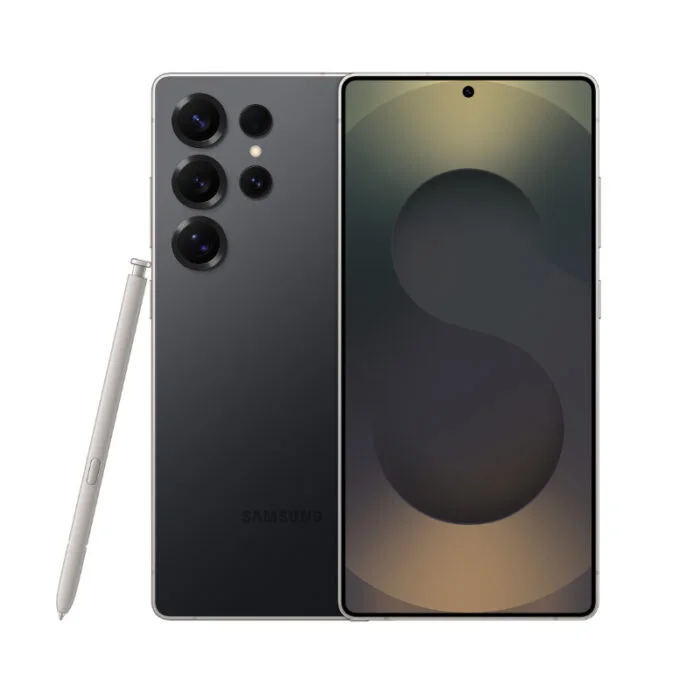
Special Offer!! Buy Samsung Galaxy S24 Ultra NOW at 20% Discount. Click Below to Buy
The Vulnerable Devices: Which 5G Samsung Phones Are Affected?
The issues are not uniform across the entire Samsung 5G portfolio. Problems tend to cluster around specific model generations and processor choices.
1. The Exynos Flagships (The Historical Struggle)
Kenya is part of the global market that typically receives Samsung’s flagship phones powered by their in-house Exynos chipsets, rather than the Qualcomm Snapdragon processors sold in the US. This distinction is paramount when discussing network stability and thermal management.
Historically, the Exynos integrated modems have lagged behind their Qualcomm counterparts in energy efficiency and signal acquisition.
Focus Model: Galaxy S21 Ultra (Exynos 2100)
The S21 Ultra, while a powerhouse, was among the first to fully integrate a 5G modem into the main system-on-a-chip (SoC). While it was a step up from the S20 Ultra, users in Kenya often report that heavy 5G usage—like video calling or high-speed data downloads under the sun—leads to significant thermal throttling. Once the device hits these limits, 5G signal stability plunges, and connections are often dropped.
Focus Model: Galaxy S22 Ultra (Exynos 2200)
The Exynos 2200, despite promises of improved efficiency, continued to struggle. While its modem was competent, its overall power draw was high. In the Kenyan context, this translated to rapid overheating when 5G data was active, resulting in frequent reports of data connections stalling and the phone becoming uncomfortably hot to the touch.
2. Specific Mid-Range A-Series Models
Samsung’s massive A-series dominates the Kenyan market, offering 5G at lower price points. However, some models use older, less efficient 5G chipsets.
Focus Model: Galaxy A53 5G (Exynos 1280)
The Exynos 1280, while designed to bring 5G to the mid-range, struggled with thermal efficiency. We consistently see reports from Kenyan users about the A53 5G overheating during relatively routine 5G tasks. This leads to frustrating performance slowdowns and, more critically, frequent network drops where the 5G signal vanishes, requiring a manual toggle of Airplane Mode to recover.
Focus Model: Galaxy A33 5G (Exynos 1280)
The A33 5G shares the same Exynos 1280 chipset as its slightly pricier sibling, and consequently, it inherits the same thermal and connectivity challenges.
3. Early Generation Foldables
The initial iterations of Samsung’s innovative foldable designs prioritized mechanical engineering over optimized internal thermal paths for 5G modems.
Focus Model: Galaxy Z Fold 3 & Z Flip 3 (Exynos Options/Early Snapdragon 5G)
The compact, foldable designs are incredibly difficult to cool effectively. The tightly packed internals mean that heat generated by the 5G modem has nowhere to go. Kenyan users of these specific early foldables, which often had less robust thermal dissipation systems, frequently report rapid overheating and concomitant network drops, particularly in warm regions.
Understanding the User Experience: From Overheating to Disconnected
These technological issues manifest in specific, frustrating scenarios for the Kenyan user:
Scenario A: The Blocked Data Stream
You are downloading a large app from the Play Store via a strong Safaricom 5G signal in Nairobi CBD. Your phone rapidly gets hot. Suddenly, the download status bar freezes. The 5G icon is still there, but no data is moving. A moment later, the 5G icon changes to 4G, and the download restarts at a slower pace.
Scenario B: The Dropped Video Call
You are on a WhatsApp video call using 5G. Within ten minutes, the phone is uncomfortably hot against your ear. Your call quality degrades, and then disconnects completely with a “Network Error.” The issue wasn’t the Safaricom infrastructure; your phone thermally throttled the modem, causing it to lose the 5G connection.
Scenario C: The Battery Drain (A Direct Consequence)
If your phone is continuously searching for a weak 5G signal or is running hot from 5G data use, your battery percentage will plummet. A phone struggling with network drops will always show abysmal screen-on time.
How to Manage Network Drops and Overheating on Your Current Samsung
If you own one of the vulnerable devices, all hope is not lost. You can mitigate the effects:
-
Restrict to 4G in Weak 5G Areas: This is the most effective single step. If you are not actively downloading large files and are in an area with spotty 5G, navigate to
Settings > Connections > Mobile Networks > Network Modeand selectLTE/3G/2G (Autoconnect). By disabling 5G, you eliminate the primary source of extreme heat and modem stress, dramatically increasing signal stability. -
Avoid 5G Data Use in Direct Sunlight: When outdoors in warm temperatures, minimize heavy 5G data usage. If you must use it, seek shade.
-
Use Optimized Battery Modes: Samsung’s Device Care options often include power modes that restrict CPU performance. Limiting performance can reduce heat, which inadvertently helps the modem maintain a stable, lower-power connection.
-
Keep Software Updated: Samsung frequently issues firmware patches that optimize modem behavior, thermal thresholds, and network stability. Never ignore an update.
-
Remove Thick Cases: Rugged, insulating cases trap heat, preventing dissipation. When using heavy 5G, consider removing the case to allow the device to cool more effectively.
Where to Fix or Need a Phone at an Affordable Price
This complex intersection of emerging 5G networks, equatorial heat, and specific phone vulnerabilities requires a service provider who truly understands the Kenyan tech landscape. We have established that these issues often derive from specific hardware choices or environmental stressors. Therefore, you need a partner who can provide specialized advice and expert hardware services.
Whether you are a current owner struggling with a overheating A53, or a potential buyer looking for a reliable 5G device that won’t fail in the heat, reach out to YES Gadgets KE at yesgadgets.co.ke.
Why Choose YES Gadgets KE?
In direct relation to the topics discussed above, YES Gadgets KE is your essential partner for the following reasons:
-
Affordable, Specialized 5G Phone Repairs: We highlighted that the core problem is hardware optimization. YES Gadgets KE specializes in expert component-level repairs, including motherboard servicing, thermal paste replacement, and modem diagnostics. When a device like an S21 Ultra experiences persistent overheating that software cannot fix, our technicians can assess the internal thermal paths and cooling mechanisms. We provide these complex technical services at prices that are accessible to the average Kenyan consumer, cutting through the inflated markups often found in authorized repair centers.
-
Expert Knowledge of the Kenyan Market: Our staff in Nairobi CBD are intimately familiar with the real-world performance of these phones in Kenya. They can provide genuine advice, steering you away from problematic models (like the A53/A33 in warm areas) and recommending Samsung devices known for excellent thermal performance on local 5G networks (such as the Galaxy A34 or the Snapdragon-based flagships like the S23 series). This localized insight prevents expensive purchasing mistakes.
-
Affordable and Certified Pre-Owned Samsung Devices: If your current device is a victim of irrecoverable network failures, or if you need to upgrade to a device with proven local reliability, YES Gadgets KE offers a wide range of affordable, certified pre-owned Samsung phones. We rigorously test our pre-owned stock to ensure signal stability and thermal performance on Kenyan networks before they are sold, giving you peace of mind that your new purchase will actually connect.
-
Authenticity and Accountability: In a market often flooded with refurbished units that fail on arrival, YES Gadgets KE prioritizes genuine, high-quality electronics. When you purchase or repair a device with us, you get a clear breakdown of the service, genuine parts, and an accountable guarantee, which is crucial when dealing with complex connectivity problems.
Don’t let the technical complexities of 5G connectivity limit your digital life in Kenya. Whether your current Samsung is overheating or you are in the market for a reliable, affordable 5G device, YES Gadgets KE provides the localized expertise and accessible solutions you have been looking for.